
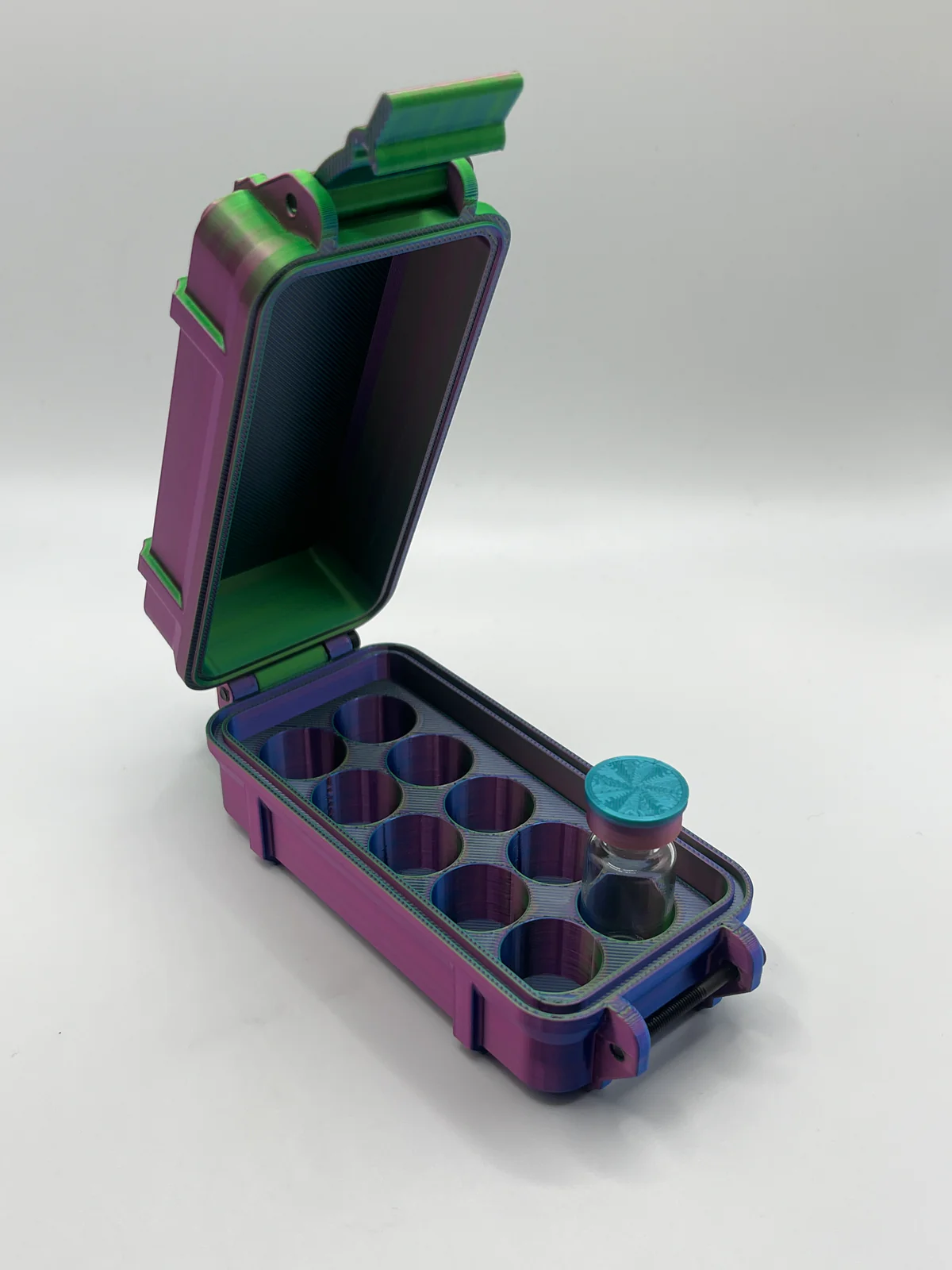
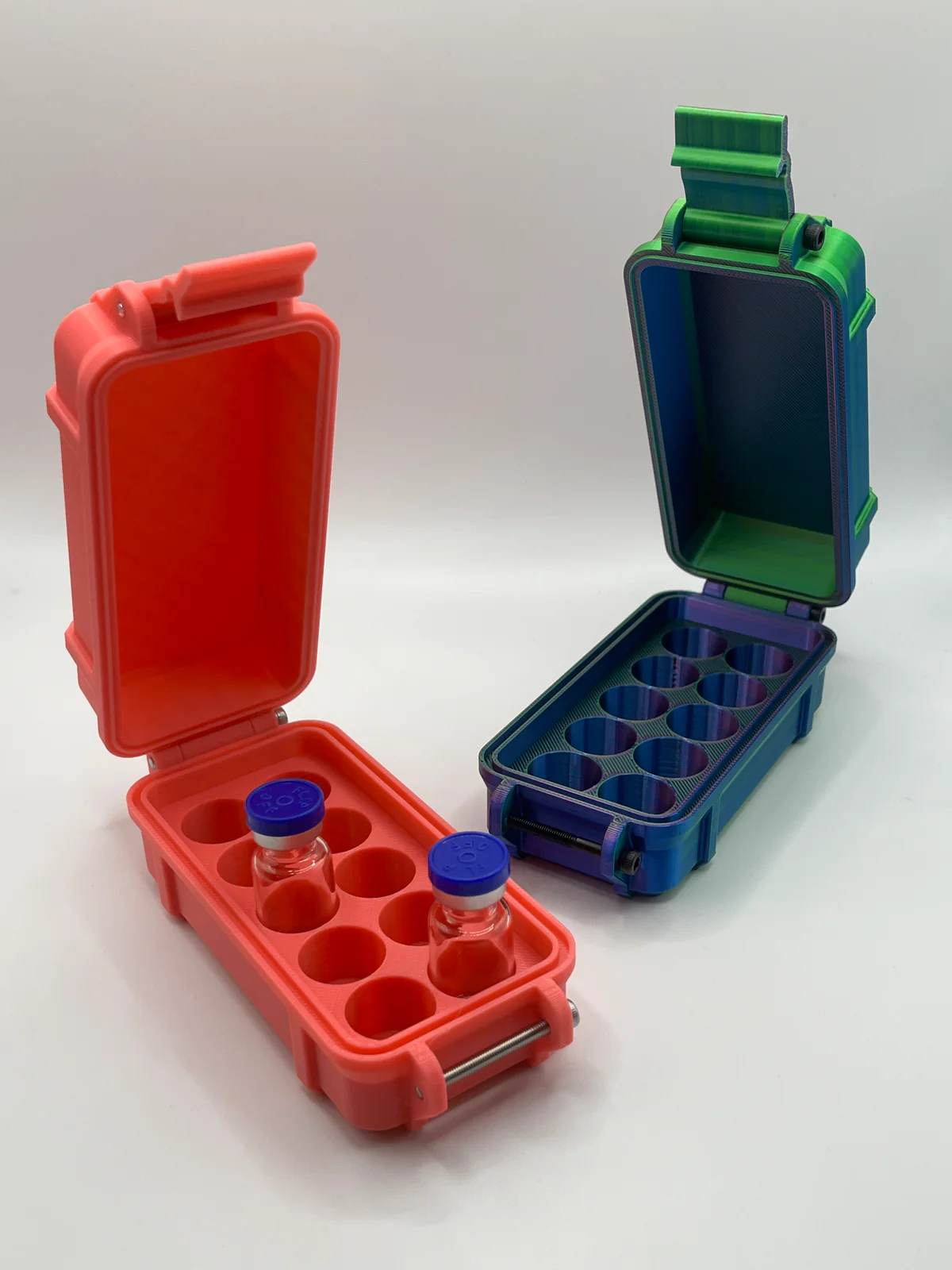


3mL 10 Vial GLP1 / Peptide Case (Long)
$12.99
Comprehensive Guide to 3mL 10-Vial GLP-1 and Peptide Cases (Long Format): Secure Storage, Cold-Chain Compliance, and Research Portability
Welcome to Suzhou Lanhai Peptide, your trusted global source for advanced synthetic peptides, amino acid derivatives, and specialized laboratory storage solutions. In modern pharmaceutical synthesis, clinical trials, and specialized metabolic research—particularly involving GLP-1 receptor agonists and complex peptide sequences—maintaining structural protection and thermal stability during transport is paramount. When handling linear arrays of multi-dose vials, utilizing a specialized 3mL 10-vial GLP-1 and peptide case (long format) is essential for safeguarding sensitive biological compounds.
This comprehensive guide explores the structural engineering, ergonomic long-format design, material science, and cold-storage compatibility surrounding 10-vial linear peptide storage cases. By examining real-world industry benchmarks and laboratory logistics data, we outline why optimized linear containment is a critical asset for researchers and clinical coordinators.
1. The Specific Utility of Long-Format Linear Cases in Peptide Research
In peptide and metabolic research—such as studies tracking GLP-1 analogues, metabolic regulators, and multi-vial therapeutic sequences—researchers frequently manage sets of consecutive or related samples.
The Challenges of Multi-Vial Handling
Managing multiple 3mL glass vials in standard square boxes or unorganized trays presents distinct logistical hurdles:
-
Workflow Inefficiencies: Standard square grid boxes require vertical extraction, which can slow down high-throughput pipetting or serial testing sequences.
-
Rolling and Friction Hazards: In standard containers without dedicated individual channels, loose vials can roll against one another, increasing the risk of label abrasion, scuffing, or glass-on-glass micro-fractures.
-
Ergonomic Field Transport: When transporting a precise sequence of clinical or research samples to external facilities, compact linear profiles fit effortlessly into laboratory coats, medical bags, and slim refrigeration slots.
The Engineering Solution: The Long-Format 10-Vial Architecture
A 3mL 10-vial long-format case is specifically engineered to hold exactly ten 3mL tubular vials in a streamlined, single-file linear array. This geometry optimizes internal space utilization, provides immediate visual auditing of the entire sample batch at a glance, and fits neatly into narrow medical cooling sleeves.
2. Material Science and Ergonomic Engineering
To meet the rigorous demands of professional research environments, long-format cases require advanced polymer manufacturing and precise dimensional tolerance.
High-Impact Polymer Construction
The outer shell of a professional 10-vial long case is molded from medical-grade polypropylene (PP) or high-density polyethylene (HDPE):
-
Tensile Resilience: Withstands bending stresses and drops without compromising the structural integrity of the outer housing.
-
Chemical Resistance: Impervious to standard laboratory alcohols, mild disinfectants, and sanitizing agents used during cleanroom transfer protocols.
Precision-Molded Linear Foam Channels
The interior features a custom-machined closed-cell polyethylene foam insert tailored precisely to the outer diameter and length of ten 3mL vials:
-
Snug Friction Fit: Each vial rests in its own isolated cradle, eliminating lateral shifting and dampening shock vibrations during transit.
-
Easy Extraction Design: Finger-relief recesses alongside each vial slot allow technicians wearing gloves to retrieve individual samples smoothly without jarring neighboring vials.
3. Cold-Chain Integrity and Ultra-Low Temperature Compatibility
Many synthetic peptides and GLP-1 research compounds require strict temperature management, moving frequently between ultra-low temperature (ULT) freezers and active testing environments.
Thermal Stability in Sub-Zero Freezers
Long-format cases designed for biomedical applications utilize cold-stabilized polymers that retain their structural flexibility and latch-locking strength in $-20^\circ C$ or $-80^\circ C$ freezers, preventing brittleness and hinge failure.
Moisture and Environmental Sealing
When transitioning samples from cold storage to room temperature, condensation can form. Secure perimeter latching mechanisms and tightly sealed housings prevent moisture ingress, protecting paper sample labels from water damage and keeping vial caps free of frost fusion.
4. Laboratory Organization, Traceability, and Compliance
Regulatory standards in pharmaceutical research require absolute precision in chain-of-custody documentation and batch tracking.
Linear Sequence Auditing
The 10-vial linear layout allows researchers to organize samples sequentially (e.g., dosage escalations, time-point sampling, or dual-peptide combinations). This visual order minimizes human error during complex experimental protocols.
Surface Optimization for Barcoding
The flat exterior lid and spine of the long case provide optimal surface area for adhesive barcodes, QR codes, or laser-etched identification tags, allowing seamless integration with laboratory information management systems (LIMS).
5. Frequently Asked Questions (FAQs)
1. What exact vial sizes are compatible with the 3mL 10-vial long case?
This case is custom-engineered with internal channels specifically tailored to securely hold ten standard 3mL tubular glass vials, small serum bottles, or HPLC autosampler vials of matching dimensions.
2. Can the long-format case withstand being stored in ultra-low temperature freezers?
Yes. The case is molded from cold-stabilized polymers designed to endure sub-zero freezer environments without cracking, warping, or losing latch elasticity.
3. How does the linear design protect glass vials during travel?
By housing each vial in an individual, foam-cradled slot arranged in a single file line, the case prevents glass-on-glass contact and absorbs drop impacts during inter-facility transit.
4. Are the internal foam inserts resistant to chemical cleaning agents?
Yes. The closed-cell polyethylene foam is non-absorbent, chemically inert, and fully compatible with medical-grade sanitizing wipes and laboratory alcohols.
5. Is this case suitable for institutional and clinical research compliance?
Yes. It is engineered specifically for biotechnology laboratories, clinical trial coordinators, and research institutions requiring structured, secure, and auditable sample management.
Be the first to review “3mL 10 Vial GLP1 / Peptide Case (Long)”
Related products

peptide storage for sale

peptide storage for sale


peptide storage for sale


peptide storage for sale
Reviews
There are no reviews yet.